Components
Custom Elements Manifest
Tool · editor workflow
Bring the components, tokens, and utility classes your team already publishes into the editor.
Local-first and editor-agnostic, the server reads existing manifests or discovers them from installed packages. It does not ask you to adopt a new all-in-one format.
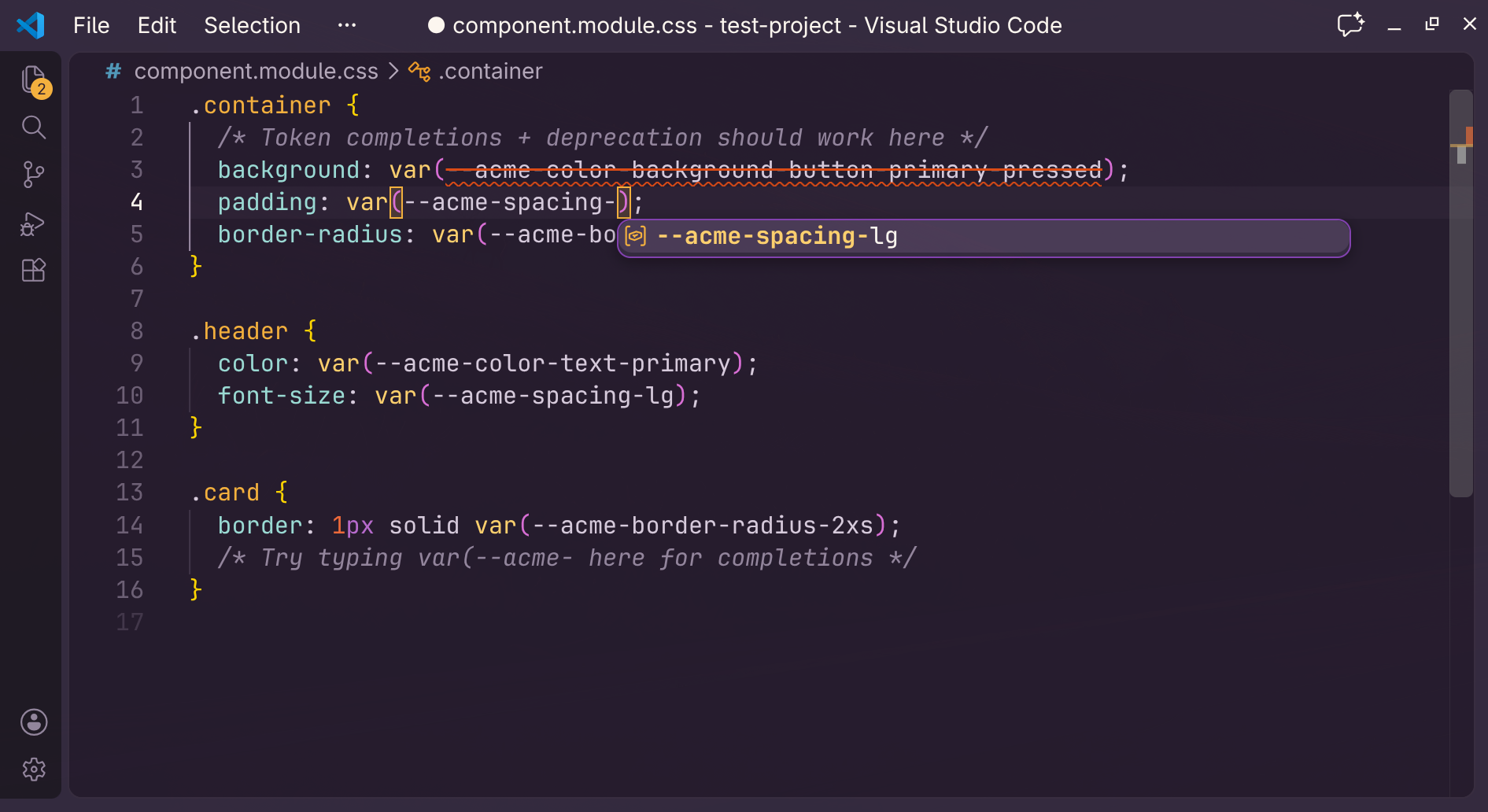
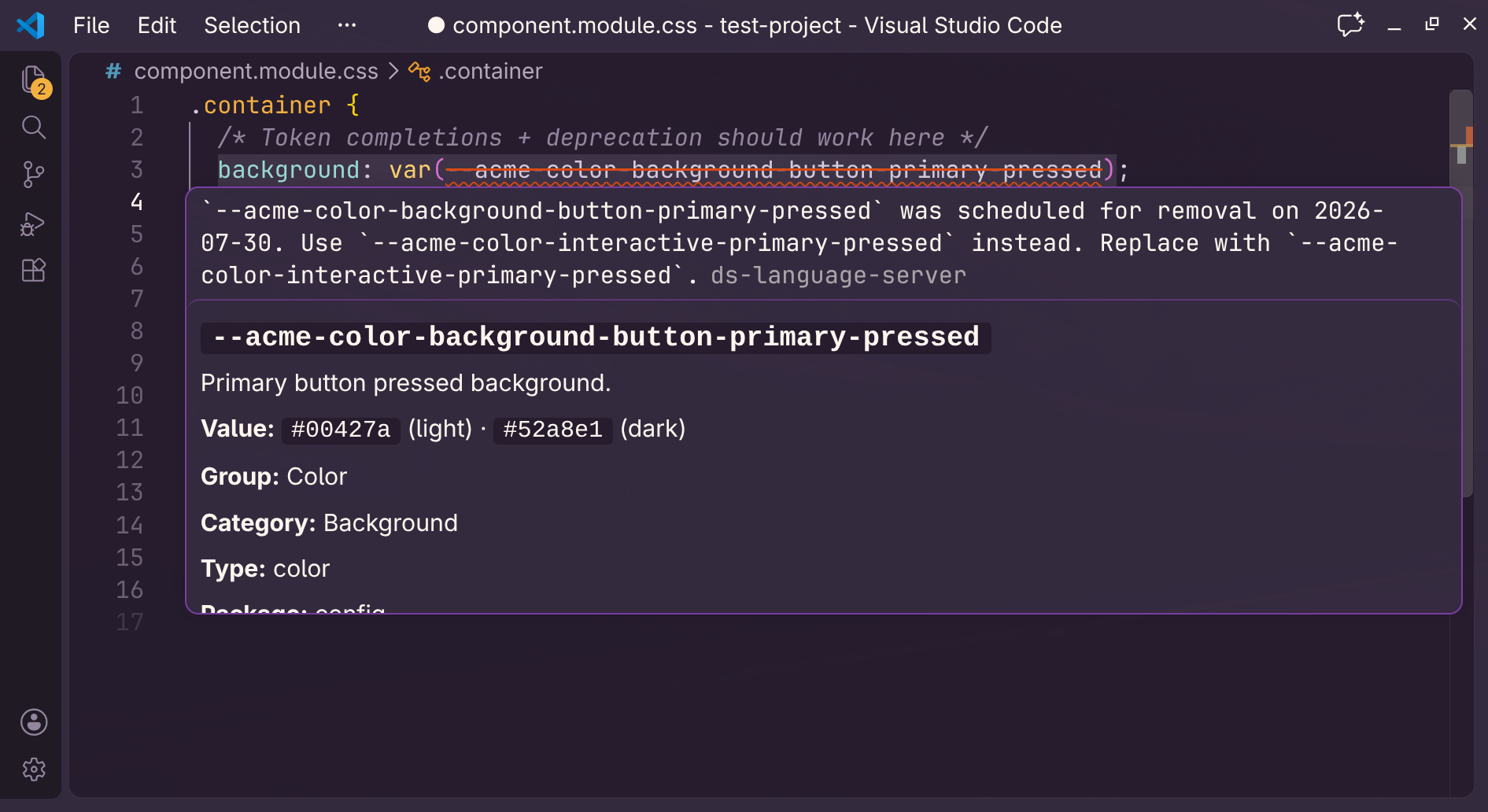
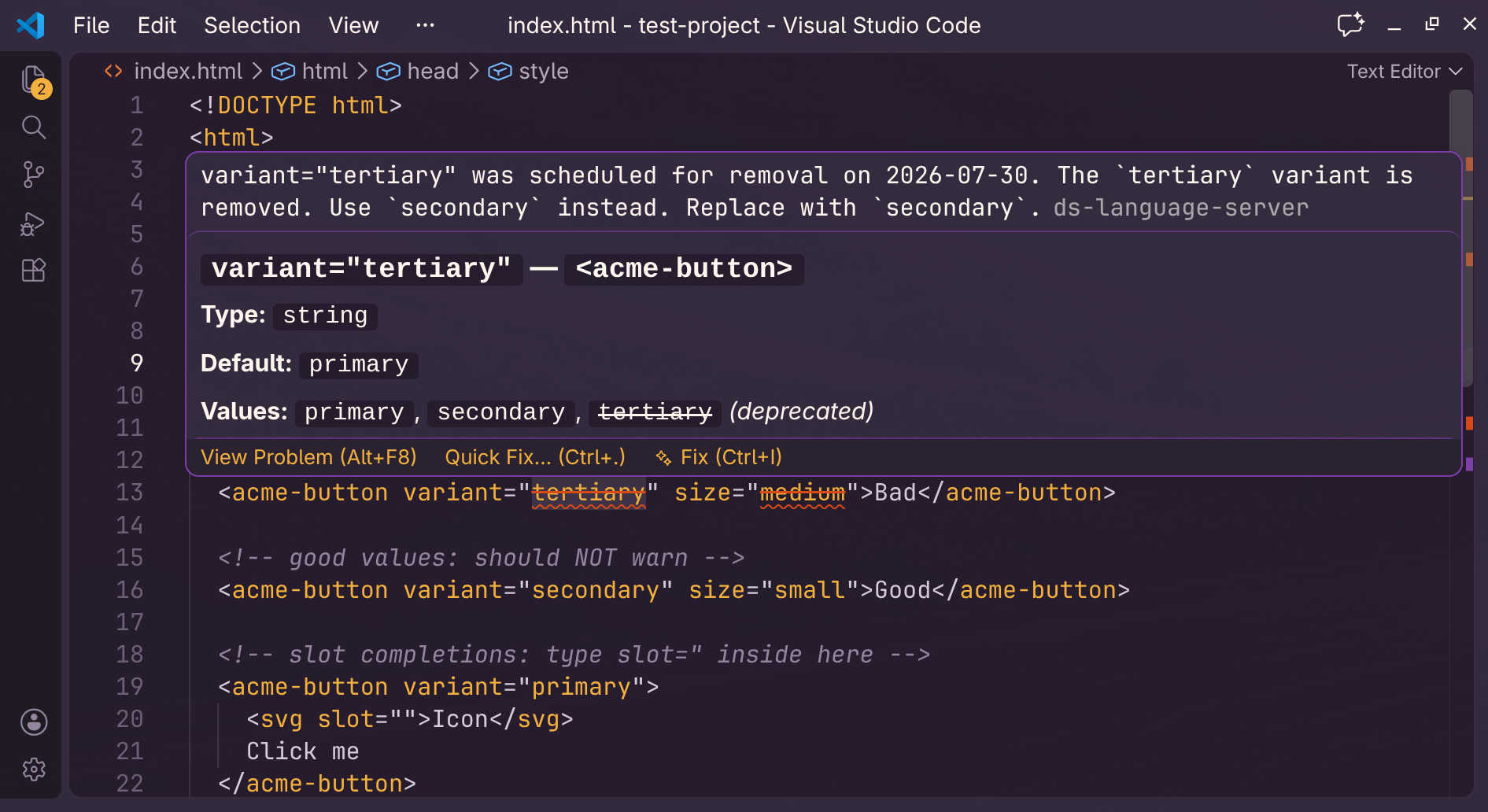
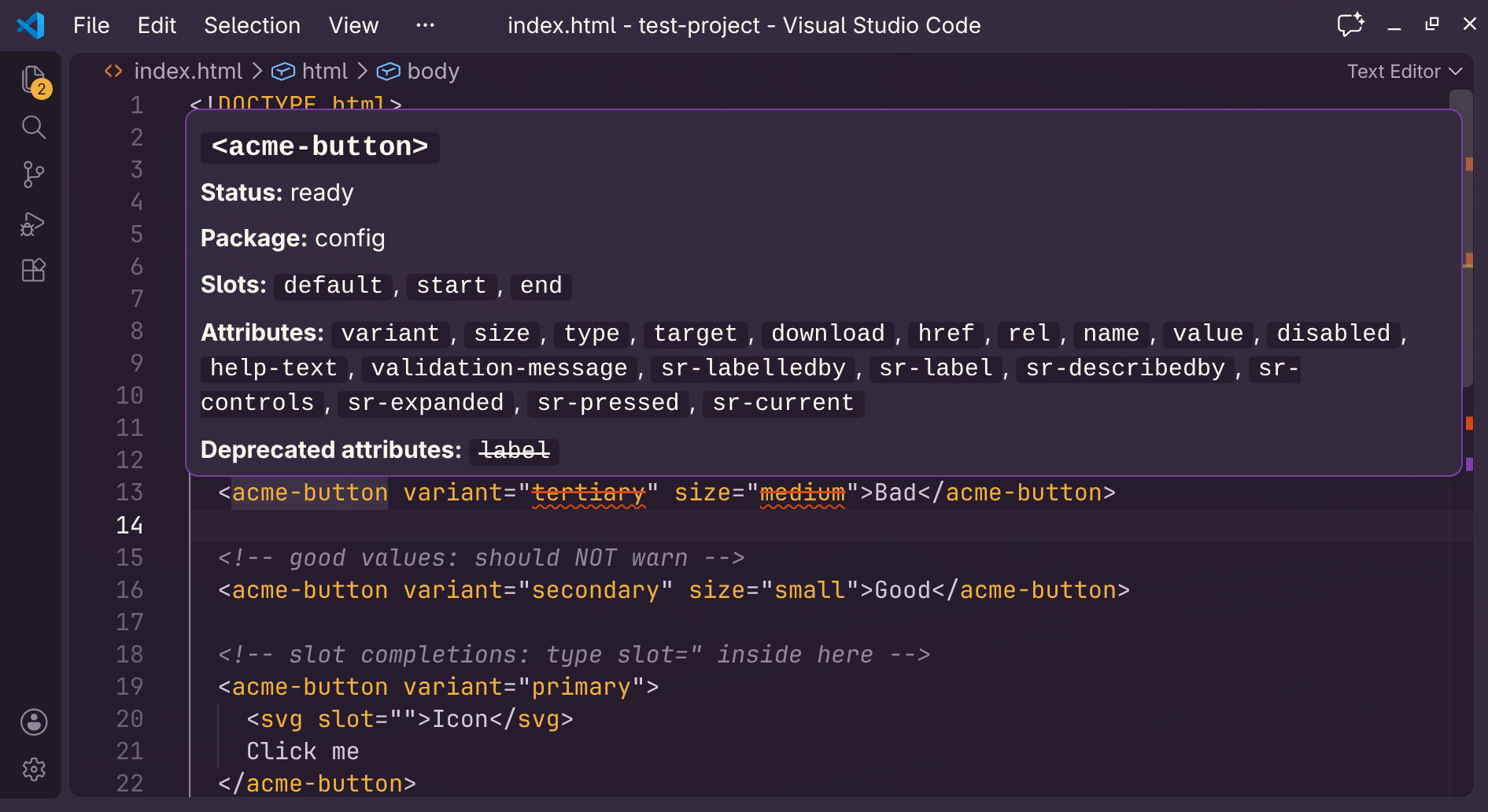
The Language Server gives feedback in the context where it matters: while you are writing code.
One server, three sources
The Language Server combines these three familiar sources into one editor experience—without asking a team to move its data into a new format.
Custom Elements Manifest
Token document
Utility manifest
One local process
Completions, hovers, diagnostics, and migration actions in the editor.
Get started
The same local Language Server powers both editor integrations. Each integration activates for web-focused files and connects to the manifests in your workspace.
Editor integration
Completions, diagnostics, hover details, and migration actions in HTML, CSS, SCSS, JavaScript, TypeScript, JSX, and TSX.
Editor integration
A Zed extension registers and starts the same server for HTML, CSS, JavaScript, TypeScript, JSX, and TSX workflows.
Coming soon